Leadership Toolbox
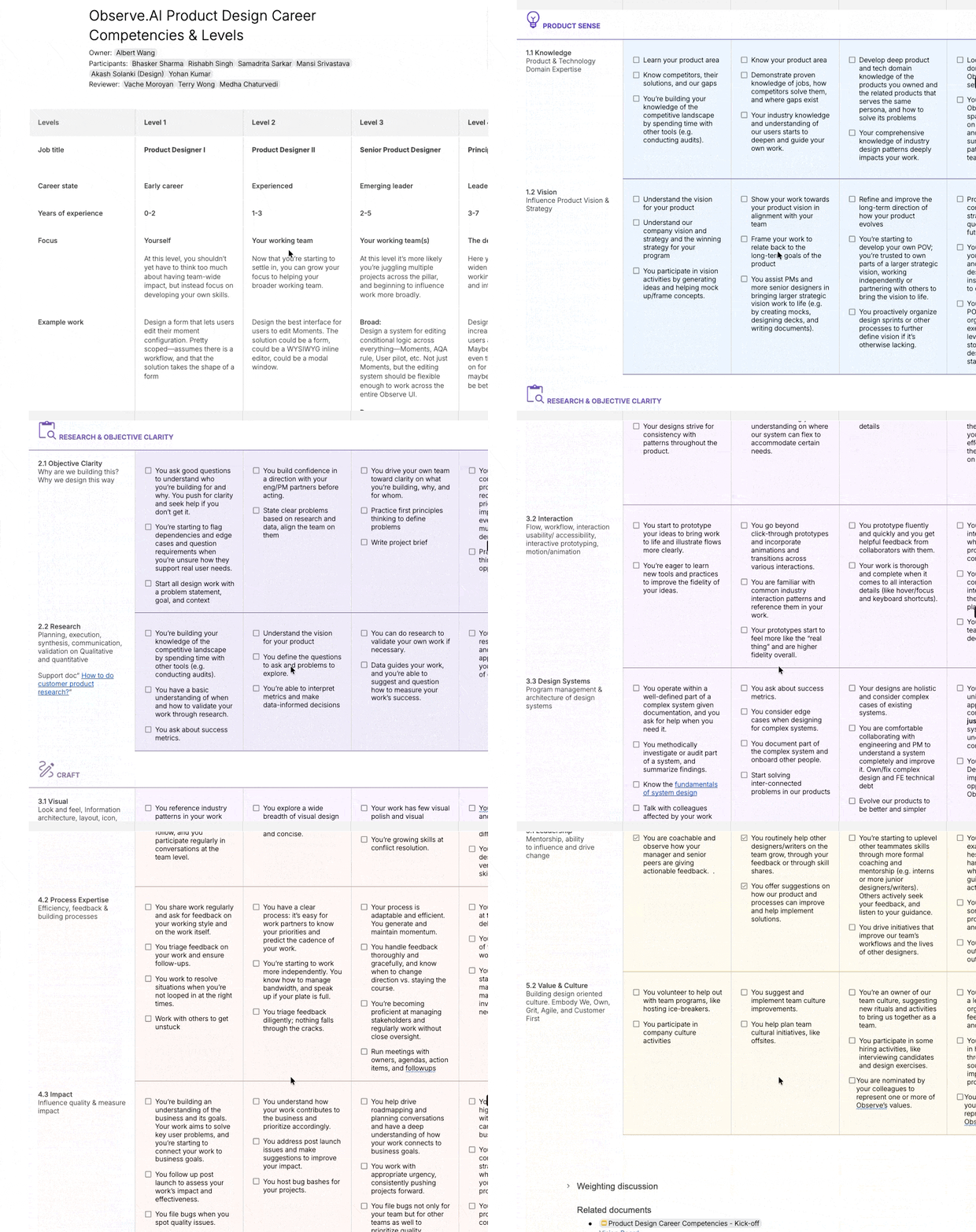
Product Design Career Competencies & Levels
I developed a Product Design Career Competencies and Levels framework with the team to clearly define what “good designer” looks like across the organization. We articulated core skill tracks—product sense, research, craft, communication, and cultural contribution—and mapped expected outcomes for each level of experience.
This framework enables more consistent hiring, supports structured growth for designers, and provides visibility into each individual’s skill profile—whether they are a well-rounded generalist or a T-shaped specialist. It also helps cross-functional partners understand the capabilities and expectations of designers at different levels, improving collaboration across teams.
User Research Training
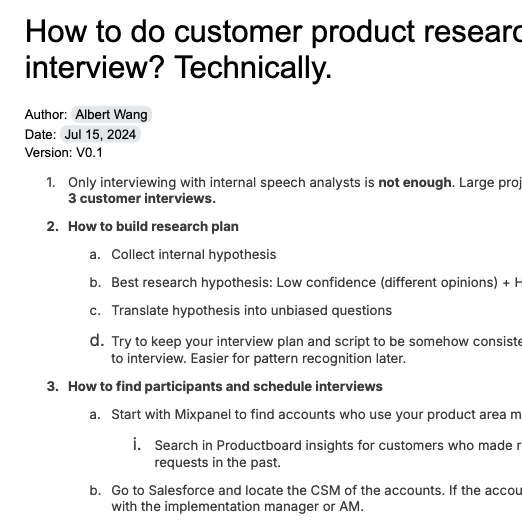
I’m a strong believer in evidence-based design, especially in SaaS where limited tracking data makes user research even more essential. To strengthen our practice, I created a structured training guide that teaches PMs and designers how to run effective research—from understanding a user’s business context and configurations, to forming hypotheses, crafting non-leading questions, and asking focused follow-ups during interviews. It distills years of research experience into a clear, practical framework I’m proud to share with the team.
Doc: How to do customer product research and interview, Technically
Google Design Sprint
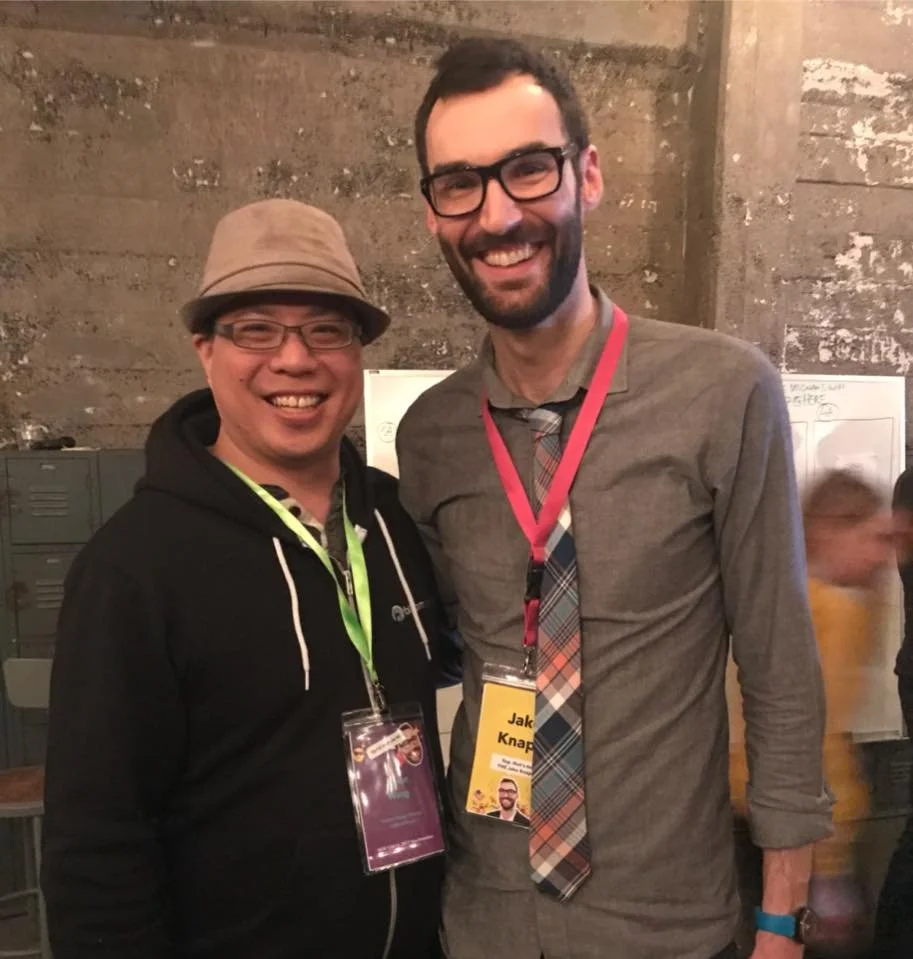
I’m a certified Google Design Sprint Master trained by Jake Knapp, and the framework deeply shapes how I approach design and problem-solving. I’ve led more than ten sprints across product strategy, UX, marketing, and acquisition work, helping teams make faster, clearer, and more reliable decisions. It’s a tool I’m proud to bring into any organization.
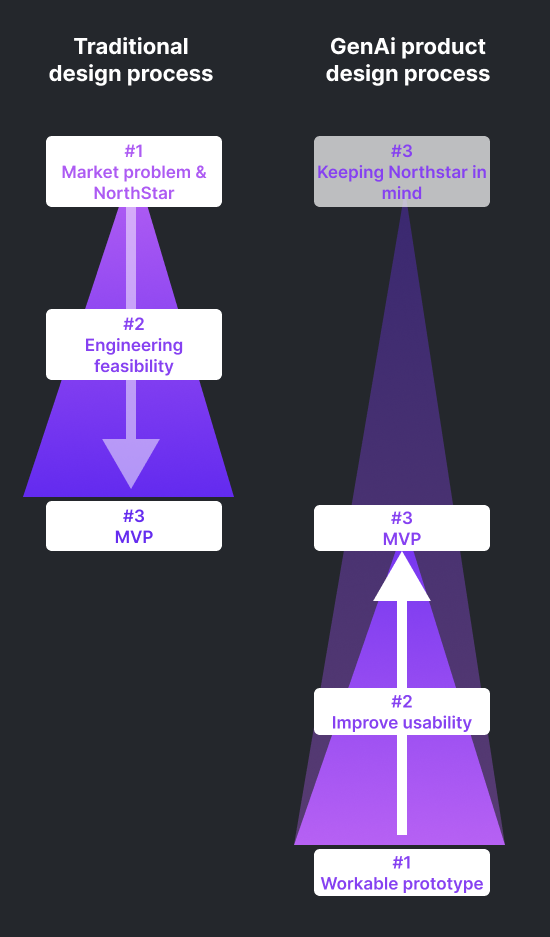
Gen AI Product Design Process
Over the past year, I’ve focused on building GenAI products and developed a dedicated methodology for designing them. I outline how GenAI design differs from traditional workflows, highlight the tooling involved—such as prompt engineering and AI-driven prototyping—and share my hands-on experience creating voice agents, collaborating across teams, and testing these systems. I also address the recurring question of whether AI will replace designers.
How to Learn Any Complex Domain Fast
To quickly master complex domains as a product designer, I rely on five daily habits. I start by staying genuinely curious about my colleagues' expertise, using their passion to fuel my own learning. When facing technical jargon, I "replay" what I've heard back to them, allowing experts to correct my understanding even if I only initially grasped a fraction of it. I also create a safe space for ideas by explicitly stating "I'm just prototyping," which invites collaboration rather than critique. To clarify abstract debates, I whiteboard conversations in real-time, leveraging visualization to align the team. Lastly, I build a "concept car"—a visionary prototype of the product's future—to provoke discussions and validate my understanding with cross-functional partners.
Youtube: How to learn any complex domain in no time! | Albert is just prototyping